

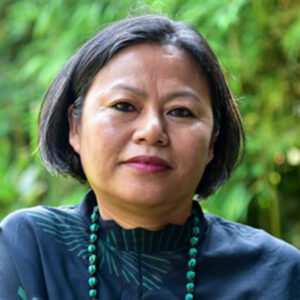
Semanta Dahal is a practicing Nepali attorney with more than a decade working in Nepal’s legal sector. On topics like foreign investment, private equity, project financing, public-private partnerships (PPP), energy and infrastructure, cross-border power trade, and infrastructure concessions, he has provided advice to both Nepali and international clients.
Mr. Dahal advised the Office of the Investment Board of Nepal on the drafting, negotiation, and completion of significant infrastructure PPP agreements, including the completion of PDAs for two 900 MW projects, each with a value of over $1 billion. He has also provided government advice on the writing of the PPP laws, the Foreign Investment and Technology Transfer Act, and other investment-related laws in comparable engagements.
Additionally, he provided guidance in the formation and design of the Business Oxygen Private Limited, private equity fund for the IFC and oversaw negotiations for twelve projects totaling more than forty crores Nepali rupees. He recently provided the GON advice over the 500 million USD Compact for Nepal from the Millennium Challenge Corporation (MCC).
Semanta studied law at the National Law School of India University and the University of Nottingham with a focus on international economic law. His interests include working with aspiring business owners to offer legal counsel, and as a hobby, he wants to be able to recognize and name all of Nepal’s mountain peaks.
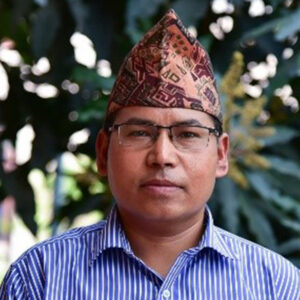
Hemlata Rai has worked in international development for nearly 20 years, spending time in Nepal, Thailand, Liberia and Ethiopia. She has performed work for the European Union, GIZ, and the United Nations. She specializes in women’s rights, peacebuilding, and conflict transformation. She worked in the media before transitioning into the development industry.
She is a former Fulbright Scholar and graduated from Eastern Mennonite University in Virginia, USA, with a master’s degree in Peacebuilding and Conflict Transformation. In addition, she holds an MA in English literature from Tribhuvan University in Nepal. Hemlata enjoys writing picture books for kids as a hobby. She has published eight titles of children’s books.

Nisha Pandey is a research and program management specialist based in Nepal with a strong background in governance, peacebuilding, climate change and security. Nisha has over 15 years of demonstrated experience in designing and implementing programs and research/evaluations for fragile and conflict-affected contexts covering Nepal and the South Asia region. Nisha’s work has been published in reputed international peer-reviewed journals. She firmly believes in the transformative power of education and spends her free time designing inclusive interactive educational content for children.
Nisha holds an MPhil degree in public administration from Tribhuwan University and a postgraduate degree in Human Rights from the University of Essex.
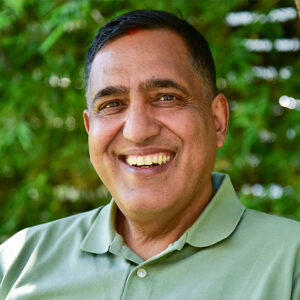
Shiva Bisangkhe is a practicing lawyer and an assistant professor teaching at Kathmandu University School of Law. Before joining Kathmandu University, he served as the Chief Executive Officer of the Nepal Law and Policy Centre (NLPC) and Executive Director of the Democratic Freedom and Human Rights Institute (DFHRI). He also worked as a senior program officer for the human rights program at the Alliance for Social Dialogue. Shiva has also worked at the Nepal Water Conservation Foundation, besides serving as the Chief of the Personal Secretariat of the Minister for Water Resources, Government of Nepal.
He has co-authored three books on issues centered on water, contributed articles on diverse topics in journals and print publications, and participated and presented in several national and international forums.
He is a Chevening Scholar and graduated from the University of York, UK, in International Human Rights Law and Practice. Shiva holds a master’s degree in political science and a bachelor’s degree in law from Tribhuwan University.
Hari Sharma is the Executive Director of Purak Asia. Prior to leading Purak, he served as the executive director of Alliance for Social Dialogue (ASD). He is a member of the board of Social Science Baha.
He has held a range of positions in both the government and the academia. Hari’s vast experience as a lecturer at various universities, including Tribhuvan University, Kathmandu College of Management, and Kathmandu University, has equipped him with a deep understanding of the academic landscape. Furthermore, his tenure as Prime Minister GP Koirala’s principal secretary and advisor to the President of Nepal Dr. Ram Baran Yadav on political and foreign affairs highlights his extensive experience in the government sector. Hari’s contributions to Afghanistan’s Office of Administrative Affairs and Office of the President also demonstrate his ability to provide valuable insights and guidance on matters related to governance.
Hari graduated with a bachelor’s in political science from Panjab University in India and a master’s in political science from Tribhuvan University in Nepal. He was a Fulbright scholar from Cornell University. He is the co-author of two books, Political Leadership in Nepal and Local Leadership in Nepal. His interest in South Asia, geopolitics, social movements, comparative political institutions, democratic transition, and social dialogue enables him to discuss these issues.

Prem Sapkota is the Deputy Executive Director of Purak Asia with more than fifteen years of expertise managing grantmaking initiatives in Nepal while working for a global philanthropic organization. In the aftermath of the peace process in 2007, he pioneered the use of social dialogue to bring together divergent ideas and thoughts across the country through initiatives like Lokmatko Khoji. He has also contributed to innovative youth initiatives including Youth Action Fund, New Media and Debate, which were crucial in fostering a culture of debate and motivating young people towards critical thinking. He led the Policy Fellowship Program and developed the idea for consortium grants on elections, which brought together a number of groups to work on free and fair elections. Prem has always played a pivotal role in the organizational strategic writing, budgeting and leading the team. Prem holds a graduate degree in anthropology and has attended several non-degree programs, including the Social Data School at Cambridge Digital Humanities, University of Cambridge in the United Kingdom, the Leadership for Results program at INSEAD in Singapore, Public Policy and Debate at the Central European University in Budapest and the Public Policy Evaluation program at the University of Maryland in the United States. Also, he sat on the International Debate Education Association’s Asia Advisory Board (IDEA) from 2010-2013.

Neetu Pokharel is a program manager with over 10 years of experience on women’s rights, community legal empowerment, social inclusion, and the protection of minority rights. She currently leads the socio–economic justice portfolio with a particular focus on land and housing rights, gender justice, and sustainable development goals in Nepal and South Asia. Previously, she worked with the Women’s Rehabilitation Centre Nepal (WOREC) on women, peace and community development. Ms. Pokharel completed her Master’s Degree in Conflict, Peace and Development Studies from Tribhuvan University, Nepal and the Ruhuna University of Sri Lanka. She also holds a Bachelor’s Degree on law from Tribhuvan university, Kathmandu. She has published number of articles on justice, migration, citizenship and women’s rights.

Shehnaz Banu is a program manager with over 12 years of experience in development communications and project management within the not-for-profit sector. Shehnaz has led several campaigns and implemented impactful programs on elections, civil society discourse, policy fellowship, new media and debate and so on. Currently, Shehnaz serves as the Program and Communications Manager at Purak Asia, where she is responsible for developing and executing programs that align with the organization’s mission and goals. She also oversees all communication efforts, ensuring they are strategic, impactful and engaging.
Prior to Purak, she handled grant making at the national foundation of Open Society Foundations in Nepal, where she developed a deep understanding of the needs and challenges of communities and organizations, as well as the importance of effective communication and collaboration of communities to achieve meaningful change. Shehnaz holds a post graduate degree in management and has attended a number of non-degree programs, including Communication Policy Advocacy, Technology and Online Freedom of Expression at Central European University, Budapest, School for Creative Activism Training from Center for Artistic Activism, New York and Appreciative Inquiry Facilitation Certification from The Center for Appreciative Inquiry, US, which has equipped her with a range of skills, including strategic planning, budgeting, facilitation and team leadership. She also served in the 2019 program committee of Nepal International Governance Forum (IGF) held in Kathmandu.

Som Niroula is the program manager with a decade-long experiences of working on human rights and social justice. At present, he is leading the work on rights to food, the rights of migrant workers/informal sector workers, and the protection of freedom of expression in Nepal and in South Asia. Previously, he worked at the South Asia Forum for Human Rights (SAFHR) on peace and human rights in South Asia. He holds a Master’s Degree in Peace Education from United Nations Mandated University for Peace (UPEACE), Costa Rica. He also holds a Master’s Degree on Anthropology from Tribhuvan University, Kathmandu. He has published articles on federalism, forced migration and on minority rights.

Srishti Adhikari is a program manager with a decade long experience of working in the nonprofit sector. Over the years, she has been involved in managing a scholarship program, grants management, strategic planning and writing. Srishti has a graduate degree in public policy and management from Kathmandu University, Nepal and an undergraduate degree in critical social thought and politics from Mount Holyoke College, USA.

Rita Bhujel is the Human Resource and Finance Officer responsible for all HR and Finance function of Purak, including formulating relevant policies and procedures, payroll management, benefit administration, budgeting, day to day administration and accounting tasks. Rita comes to Purak following eleven years’ tenure at Social Science Baha, a nonprofit that conducts social science research and conferences, where she held roles to oversee overall administration, HR functions, event management, communications and also served as the executive secretary to the director. Currently, Rita is pursuing her master’s degree in business administration (MBA) specializing in human resources management from Global College International, Kathmandu.

Kranti Pageni is a program officer at Purak Asia where she plays an instrumental role in developing programs and conducting research and analysis related to Democracy and Governance. She has a diverse background in program management, having previously worked as a Program Associate for Open Society Foundations in Nepal. In this role, she managed grants, assessed grantees, and provided capacity development to partners. Her experience in working with diverse stakeholders has honed her communication, coordination, and project management skills. She has a deep interest in political science and public policy. Kranti holds a Bachelor’s degree in Business Management from Bangalore University and has completed a summer school course in Political Economy and Political Philosophy from the Asia Institute for Political Economy, accredited by George Mason University. She is the recipient of the General Cultural Scholarship from the Indian Embassy.
In addition to her professional achievements, she is a trained facilitator and loves to explore her creative side. Whether it’s designing engaging workshops or pursuing her artistic hobbies, she brings her energy and enthusiasm to everything she does.

Dina Maharjan is the Executive Secretary responsible for managing the office operations and provides administrative support. She has over seven years of experience in administration, logistics, operations, documentation, printing and publication. As the liaison between all staff, she maintains a professional and friendly approach, while exercising discretion in all interactions. Additionally, she serves as the Board Liaison at Purak. Dina holds a Master’s Degree in rural development from Tribhuvan University, Nepal.

Ganga Dahal is the Finance Assistant in charge of keeping track of an organization’s finances by assisting the finance officer in day-to-day account keeping, preparing expenditure statements, managing incoming invoices, performing tax entries, bank deposits for the organization. She holds a sound knowledge of bookkeeping, and accounting principles with good organizational skills, as well as working knowledge of accounting software. Prior to Purak, she worked as an account assistant at Social Science Baha for five years where she assisted the Finance Manager. Ganga holds an undergraduate degree in business studies specializing in Finance from Kavre Multiple Campus, Tribhuvan University.