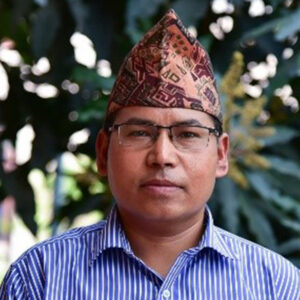
Prem Darshan Sapkota and Srishti Adhikari
Balendra Shah’s rise to Nepal’s Prime Minister marks a momentous shift in the nation’s socio-political landscape. He has successfully transitioned from being a counterculture maverick to holding the highest executive position in the country. This journey from dissenter and dreamer to deliverer is not just a personal triumph, it is also a bold experiment in technocratic populism. Examining his lyrical dissent, his institutional clashes as Kathmandu’s mayor and his crisp campaign speeches pitching innovative ideas for delivery that ultimately clinched the 2026 electoral victory for him and his party can provide much needed insight into his emergence as a national political figure.
The foundation of Balen’s identity was forged in the underground grit of “Raw Barz” rap battles, where he crafted a persona of rhythmic defiance. However, it was his track Balidan that served as a raw anthem of systemic dissent, providing a form of artistic socialization for a youth generation weary of the status quo. In Balidan, Balen delivers a fierce rebuke of the ruling elite’s integrity, famously rapping: “Desh ko rakshya garne jati sabai chutiya chan / Neta jati sabai chor, desh luti khachan” (All those who claim to protect the country are fools / The leaders are all thieves, they are looting the nation). These lyrics captured a sense of systemic betrayal, portraying the state as a transactional playground for the powerful while the common citizen is left behind. He further exposes the extractive nature of Nepali politics by highlighting how the poor are neglected while leaders prioritize their own gain, stating: “Yo byapaar ho sabai, yo raajniti haina / Yo rajya ko raaj-haru ma raajyog nai chhaina” (This is all a business, this isn’t politics / These rulers of the state have no sense of true leadership). By framing the political elite as predatory and transactional, Balen positioned himself as a radical outsider, building a discoghraphy of discontent that allowed him to bypass traditional party structures and speak directly to a generation that saw his music as a more honest representation of reality than any party manifesto.
When Balen joined the mayoral race for the Kathmandu Metropolitan City in 2022, he transitioned his artistic dissent into institutional dissent. During his tenure as Kathmandu mayor (2022–2026), his dissent turned institutional through vertical friction, challenging federal overreach to claim local autonomy. His most symbolic act of institutional civil disobedience was the refusal to collect waste from Singha Durbar, the seat of central power, to protest federal apathy toward local landfill issues. By forcing the federal government to confront the physical consequences of its administrative inertia, Balen signaled that local government was no longer a silent subsidiary of the center and was both capable and willing to exercise its constitutional rights and responsibilities. His efforts to reclaim the Tukucha River, clear illegally rented mall parking, evict private encroachments from public lands, and widen core-city footpaths showed that Balen prioritized the city over the serving of vested political interests. A Dreamer, he established, must first destroy illegal status quo.
The March 2026 electoral campaigns and the subsequent results validated this approach. Balen and his Rastriya Swatantra Party (RSP) crushed veterans with huge margins in Kathmandu Valley, Jhapa, Rupandehi, and beyond, shattering legacy loyalties that had been in place for decades. His campaign shifted from artistic protest to development plans. During his campaign tours across Dhangadhi, Itahari, and Bharatpur, he pitched Development Plans for National Impact: transforming the Far-West into the “Near-West” via a Tourism Circuit, revitalizing Sunsari-Morang industrial corridor, and building Chitwan as an agricultural product storage hub. RSP proposed a “New Nepal” built on digital sovereignty and structural accountability. RSP’s manifesto promised the use of an integrated National Digital ID to plug bureaucratic leaks and red tape in a paper-based bureaucracy and proposed investigation of assets acquired since 1990 to dismantle syndicate culture and ensure transparency. The manifesto further declared the Information Technology sector a National Strategic Industry, with digital parks in all seven provinces to position Nepal as a competitive hub for innovation and digital services. These policy retrofits offered by Balen and his party appealed to a large section of Nepali society and voters not only because they aligned with their dreams and hopes for the future but also because they proposed to target and replace the broken parts of the system.
As Balen ascends to the top executive position, his primary challenge shifts from identifying systemic rot to the monumental task of dismantling it within the democratic framework. He can no longer rely solely on dissent; his position requires him to master the art of negotiation and legislative diplomacy to navigate a Parliament where legacy interests still linger. However, his tenure as Mayor suggests a different approach: for Balen, delivery is the ultimate form of dissent. By making the state function efficiently, he disproves the very dysfunction he once criticized. In order to do so, he will have to apply the same micro-precision used in city management to macro challenges such as remittance dependency, a feudal-style bureaucracy, and the complex geopolitical balancing of India, China, and Western nations.
The success of Balendra Shah, the prime minister, will hinge not on viral reels on his defiance but on the tangible metrics of his party’s dream projects. However, delivery may prove difficult in a society defined by contradictory cultural expectations. This is a landscape where a remittance-based economy leaves citizens yearning for a better life while simultaneously worrying over the youth exodus. It is a society that demands corruption-free leadership yet often seeks priority privileges in public offices based on their connections; a public that overlooks zebra crossings and pedestrian rights or encroaches on public land while demanding order. They enjoy disruptive content and style but crave long-term stability.
The Shah administration must anchor its legitimacy in radical transparency and real-time fiscal auditing embedded in the national budget to dismantle entrenched corruption networks and the syndicates he once condemned. His success in transitioning from diagnosing systemic failures to reforming them will require him to grow into a national leader, one who expands domestic economic opportunities while navigating geopolitical pressures through democratic, transparent, and consultative governance. In a democracy, legitimacy endures only when it delivers.