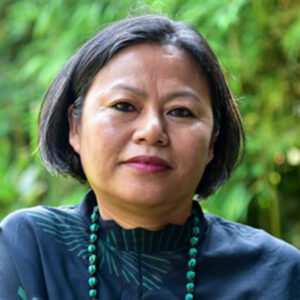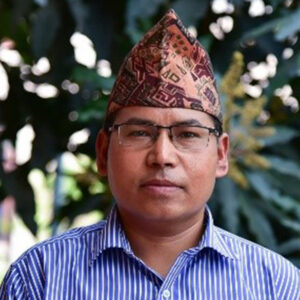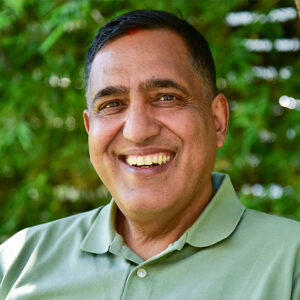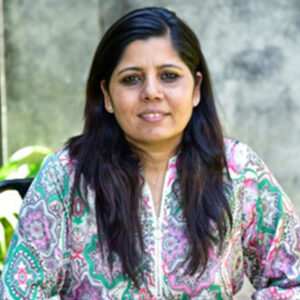
Prem Darshan Sapkota and Srishti Adhikari
The theory of disruptive innovation was introduced by Clayton Chtistensen, a Harvard Business School professor in 1997 (Christensen, 1997). His argument was simple but powerful: small, overlooked challengers can defeat powerful incumbents not by copying them, but by being “different enough” to serve those the incumbents ignore. This argument was viewed as a business school concept for the next two decades until politics adopted it. In the 2016 US elections, analysts Carole Cadwalladr and Ben Thompson observed that disruption had entered the voting booth as political outsiders learned that treating established parties like “failing incumbents” could mobilize frustrated voters who felt invisible (Cadwalladr, 2016; Thompson, 2016). Disruption thus evolved from a sentiment into a political mandate, as voters sought to dismantle the status quo and reset the governance order. Although the choice of reset did little to quell the frustration, it did give rise to populist politics.
A decade later, Nepal is living its own version of that story. This is not just true of Nepal; there is a global phenomenon where people have changed traditional political loyalties as economic and social changes impact their day to day lives. In 2024, the Tony Blair Institute for Global Change noted that democracy is changing shape worldwide, and party systems are fragmenting as voters become more volatile, fueled by a “pervasive sense of decline” and the belief that they live in “broken societies that urgently need to be repaired.” As Nepal heads toward the March general elections, the central question is no longer which party will win. It is whether the people will choose reinvention, adaptation, or stability in the form of status quo in the face of this global trend.
The 2025 Purak Asia Perception Survey revealed something contrary to what is perceived of the Nepali society: only 21.4% of citizens identified with a traditional political party, while a staggering 77.5% said they did not have any party affiliation. This is significant because Nepalis in the past have been generally candid about their support for a particular pollical party. This alone indicates that the incumbent political order is in freefall. The political landscape in Nepal has been dominated for decades by three major forces: the Nepali Congress, the CPN-UML, and the Maoist Centre. They led the 2006 people’s movement and the peace process and promulgated the Constitution in 2015. Yet by 2025, a large section of society felt that political transformation had failed to deliver economic transformation. Voters no longer feel beholden to the party loyalties of their grandparents; they see the old ideologies of “left” and “right” as diminishing in relevance.
To understand this collapse, one must look past the statistics at the stories of the working class. Last year in Pokhara, a taxi driver remarked that “even a mirror would feel ashamed of looking at the big three political leaders”. This remark made in a casual conversation with a passenger captures a crisis of legitimacy where the national leadership is viewed as a stagnant revolving door of portraits rather than a source of progress. Further south in Birgunj, the sentiment among youth has turned into selective rage. Law students, incensed at the torching of Singha Durbar and Supreme Court, both considered symbols of national pride, expressed a chilling indifference toward the burning of their own local government offices during the 2025 September protests.
This shift aligns with what political psychologist Michael Bang Petersen calls the need for chaos, a psychological state where marginalized individuals identify with the total destruction of the status quo as a way to reclaim their status (Petersen et al., 2021). To these students, local government buildings were not public property, they were sites of harassment and corruption. In Nepal, the September 8 Gen Z protest became a turning point. The anger displayed through attacks and fires at government buildings, businesses and leaders’ residences showed that for young people, disruption became a way of expressing deep frustration with a system they feel offers no future. When the law feels like a barrier rather than a bridge, and when students lose their lives, trust in the system does not just weaken, it begins to break.
This frustration is specifically rooted in the perceived moral bankruptcy of the establishment. The 2025 Purak Asia Perception Survey showed that satisfaction levels with key public institutions were alarmingly low: only 16.7% were satisfied with political parties, 22.5% with the federal government, and 24.2% with the parliament. The anti-corruption body, the CIAA, fared only slightly better at 26.6%. The deep frustration stems from a public perception that political leadership is at the center of political patronage: 93.3% of citizens believed political parties collude in major corruption cases, 89.5% believe leaders abuse power, and 90% feel they protect the corrupt. This showed that Nepalis were frustrated by leaders, not democracy. They remain committed to democratic practices but demand the removal of the broker dominant governance that has prioritized personal connections over competence.
In September 2025, that simmering discontent exploded. When the government restricted major social media platforms, it underestimated how digital life had become the everyday life of young people and a major economic tool for some sections of society. For Gen Z Nepalis, social media was livelihood and voice. The Gen Z protest that followed was leaderless and digitally coordinated, reflecting an accumulated anger toward the system. According to the Tony Blair Institute (2024), these groups would be identified as “the Outsiders”—voters who have all but given up on mainstream politics and are influenced by daily feeds of information outside traditional channels. In Nepal, these outsiders proved that the old ways of doing things were no longer enough to contain widespread discontent.
However, the story is complex. The same survey indicating growing disillusionment with political parties also revealed that 96.4% of Nepalis believe stability is essential for development. This is Nepal’s paradox: the public wants disruption, but they fear chaos. They seek a genuine reset of the political culture, not the destruction of the state. Inside the traditional system, Gagan Thapa recognized this danger. After the unrest, Thapa pushed for an internal leadership change within the Nepali Congress. This move aligns with the strategy of disruptive delivery proposed by the Tony Blair Institute (2024), which suggests that mainstream parties must “disrupt or be disrupted” by embracing transformative change rather than slow, incremental steps. Thapa offers a different approach—trying to rethink and reshape how Nepali Congress does politics so it does not fall into the simple but divisive path of frustration-driven politics.
The upcoming election underscores a global dilemma with dissenting politics for Nepal. Dissenting politics has allowed for the meteoric rise of new parties like the Rastriya Swatantra Party (RSP) and intense pressure for transformation of the traditional parties like the Nepali Congress. While the demand for a change in the status quo is very real and backed by a significant proportion of the population, there is also genuine apprehension in many about what this change is going to open the floodgates to. People are eager to see a dismantling of traditional allegiances and nexus of corruption in hopes of better governance, but they fear change in the social fabric or extremism of any form- either from the right or left. Voters are searching for an alternative that neither defends a crumbling status quo nor succumbs to the divisive simplicities of angry insurgency.
As Nepal approaches March 2026, it faces a choice that many mainstream parties across the globe are currently facing, continue to apply the old ways to fix new problems or innovate their ways to better address the voices and thoughts that differ from their own. The March elections will decide if Nepal’s path forward is a disruptive reinvention, an institutional adaptation through delivery, or a focus on nationalism and stability through existing order. The old equilibrium has borne the brunt of public discontent, what replaces or fixes it will depend on whether the outsiders can finally see their demand for good governance and integrity met by a government that works.
References
Blair Institute for Global Change. (2024). Disruptive Delivery: Meeting the Unmet Demand in Politics. Tony Blair Institute for Global Change. https://institute.global/insights/politics-and-governance/disruptive-delivery-meeting-the-unmet-demand-in-politics
Cadwalladr, C. (2016, November 6). Tech is disrupting all before it – even democracy is in its sights. The Guardian. https://www.theguardian.com/technology/2016/nov/06/technology-disrupting-democracy-donald-trump-silicon-valley
Christensen, C. M. (1997). The Innovator’s Dilemma: When New Technologies Cause Great Firms to Fail. Harvard Business Review Press.
Sapkota, P, Adhikari, S. & Pathak, T. (2025, June 26). Frustrated by leaders, not democracy. The Kathmandu Post. https://kathmandupost.com/columns/2025/06/26/frustrated-by-leaders-not-democracy
Petersen, M. B., Osmundsen, M., & Arceneaux, K. (2021). The ‘Need for Chaos’ and Motivations to Share Hostile Political Rumors. Philosophical Transactions of the Royal Society B: Biological Sciences. (Extended findings published in American Political Science Review, 2023).
Purak Asia. (2025). Citizen Perspectives on Opinion Formation, Political Parties and Leadership. https://purakasia.org/wp-content/uploads/2025/06/3-Satisfaction-and-Dissatisfaction_draft-006-press.pdf
Purak Asia. (2026, January). Youth’s Choice: Corruption Control, Economic Opportunities and Accountable Leadership. https://purakasia.org/wp-content/uploads/2026/01/Citizen-Perspectives-on-Opinion-Formation-Political-Parties-and-Leadership-2025.pdf
Thompson, B. (2016, December 13). The State of Technology at the End of 2016. Stratechery. https://stratechery.com/2016/the-state-of-technology-at-the-end-of-2016/